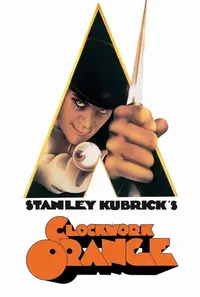
Nothing like a couple of near-future punks wreaking havoc on normal British society, with relatively little consequence. Until the government steps in, that is. While the coincidences are story-driven and a bit forced in such a short period of time film-wise, the pure concept of freedom of choice is readily apparent and nicely narrated by Kubrick. Its ultra-violence is pretty shocking by 1971's standards, and even still today, so make sure you're responsible and shield your children's senses from excessive nudity and violins.
They are totally ruled by their basic instincts. Nothing they do has consequences. The droogs of Alex's crew are the epitome of the now, responsibility is irrelevant for the marauding sprees they throw themselves into on a nightly basis. But there's some dissension by Alex's gang, and it leads him to the worst of situations. Experimental government control in order to cut costs on prison sentences. It's the worst of Orwellian nightmares as he finds not only the pleasures of his debauched lifestyle taken from him, but his love of Beethoven's Ninth Symphony as well. And then it just gets worse as he's released back into society.
Every shot is deliberate composition, and it's fucking brilliant.
It must be noted that this is Kubrick's vision of the story, originally penned by Anthony Burgess. Kubrick, while an exceptional filmmaker, tends to take some liberties with the source material he adapts. The Shining is a good example of this as well. Take my word for it, read the book. The unique vernacular, while at first difficult to understand, is ultimately more rewarding to comprehend as you go along (much too stilted in the film, unfortunately). And the 21st chapter changes EVERYTHING, something Kubrick chose to leave out of his film. Do yourself a favor, read the book as well. Despite this, Malcolm McDowell is perfectly cast in the role.